

News Blogs
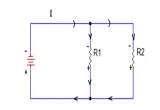
In this blog we will review the theory of the Current Divider circuits in a parallel circuit. In a parallel circuit, all the components have their terminals connected together sharing the same two end nodes. This results in different paths and branches for the current to flow or pass along. However, the currents can have different values through each component but the voltage remains the same across two end nodes.
Read More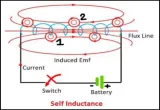
In this blog we will explore Inductance; one of the major properties of an electrical circuit or an electronic device. Inductance is defined as a property of electrical circuit or a device that opposes a change in current. It is important to note that inductance does not oppose the current but rather opposes the change in current flowing within the circuit.
Read More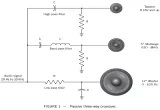
In electronics, filters serve a critical role in many common applications such as audio electronics, radio communications and power supplies. We use filters to block or pass a specific range of frequencies. The filters can be either passive or active. We usually divide filters into four main types, depending on which frequency components of the input signal they pass on to the output signal.
Read More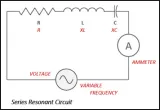
Radians and angular velocity are terms that are commonly used in AC theory and AC measurement.
Read More
In this installment of The Practicing Technicians Series we will be discussing the significance of power factor correction. As a technician, you may be responsible for monitoring and adjusting the power factor of your industrial operation. Many industrial applications involve induction motors or other equipment that results in supply voltage and supply current being out of phase. This is wasteful and expensive for power providers.
Read More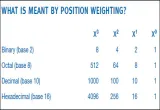
Technicians often encounter values expressed in binary, octal, or even the hexadecimal number systems. In our fifth installment of The Practicing Technician’s Series, today’s discussion focuses on characteristics that are common to all of these number systems.
Read More